

Beyond the Visa: What Attracts Investors to Greece's Golden Program
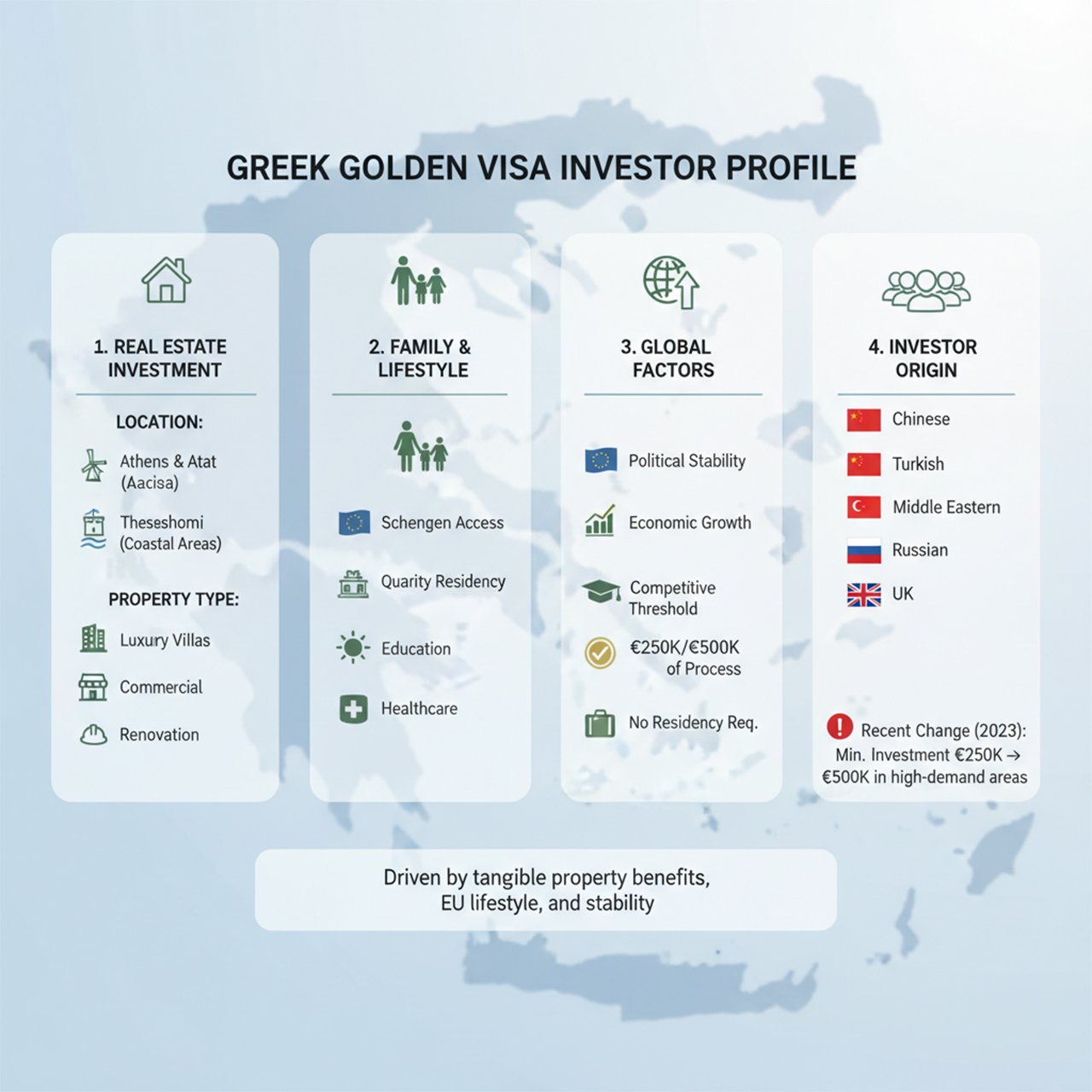
The Greek Golden Visa program has been a significant draw for non-EU investors seeking residency in Europe. Understanding the preferences of these investors is key to analyzing the program's impact and future trends. Here's a breakdown of what typically attracts Golden Visa investors to Greece:
1. Real Estate Investment: The Primary Vehicle
The most common route to obtaining a Greek Golden Visa is through real estate investment. Investors typically opt for properties that offer a combination of personal use potential and rental income.
Location:
Athens and Attica: The capital city remains a top choice due to its vibrant urban life, historical significance, cultural attractions, and strong rental market (especially for short-term tourist rentals). Areas like Kolonaki, Glyfada, Vouliagmeni, and Piraeus are particularly popular.
Thessaloniki: Greece's second-largest city offers a dynamic environment, a major port, and a growing economy, attracting investors looking for strong long-term growth potential.
Popular Tourist Islands (Mykonos, Santorini, Crete, Rhodes): These islands are attractive for investors seeking luxury villas or boutique hotels, driven by the strong tourism sector. They offer high rental yields during peak season and the potential for significant capital appreciation.
Coastal Areas (e.g., Halkidiki, Peloponnese): These regions offer opportunities for holiday homes and resort properties, appealing to those who envision personal use combined with rental income.
Type of Property:
Apartments in Athens/Thessaloniki: Often preferred for their affordability (meeting the minimum investment threshold), ease of rental, and central location.
Luxury Villas and Holiday Homes: Popular in tourist-heavy islands and coastal areas, often sought by investors looking for a second home or a high-end rental property.
Commercial Properties: While less common than residential, some investors opt for commercial spaces, particularly in high-demand areas, for business ventures or long-term rental income.
Renovation Projects: Investing in older properties for renovation can offer a lower initial entry point and the potential for significant value appreciation after upgrades.
Purpose of Investment:
Rental Income: Many investors prioritize properties that can generate stable rental income, especially in tourist hotspots or student areas.
Capital Appreciation: The hope for increasing property values over time is a significant motivator, particularly in areas undergoing urban regeneration or development.
Personal Use: Some investors purchase properties for personal use as a holiday home or a future retirement residence.
Future Resale Value: The ease of reselling the property in the future is always a consideration.
2. Family Mobility and Lifestyle
Beyond financial returns, the lifestyle benefits and opportunities for family are strong drivers for Golden Visa investors.
Schengen Area Access: The ability to travel freely within the Schengen Zone is a major perk for non-EU citizens, offering unparalleled convenience for business and leisure.
EU Residency for the Whole Family: The program extends residency to the investor's spouse, dependent children up to 21 (or 24 under certain conditions), and dependent parents of both the investor and spouse, making it attractive for family relocation or future planning.
Quality of Life: Greece offers a high quality of life with a Mediterranean climate, rich history, delicious cuisine, and a relaxed pace of life.
Education Opportunities: Access to quality education, including international schools, is often a consideration for families with children.
Healthcare Access: While not explicitly a benefit of the visa, residency grants access to the Greek healthcare system.
3. Geopolitical and Economic Factors
Global events and economic conditions also influence investor preferences.
Political Stability: Investors seek countries with a stable political environment that can protect their investments.
Economic Recovery and Growth: Greece's economic recovery in recent years has instilled greater confidence in investors.
Competitive Investment Threshold: Compared to other Golden Visa programs in Europe, Greece's €250,000 real estate investment threshold (though set to increase in certain areas) has been highly competitive and attractive.
Ease of Process: The relatively straightforward application process, though requiring professional assistance, is a positive factor.
No Residency Requirement: Investors are not required to live in Greece to maintain their visa, only needing to visit once every five years to renew it, offering flexibility.
4. Investor Demographics and Origin
While preferences vary, certain trends in investor origin are clear:
Chinese Investors: Historically, Chinese investors have been the largest group, often seeking global mobility, diversification of assets, and a "Plan B" for their families. They often prioritize properties that offer good rental yields and are located in Athens.
Turkish Investors: Driven by economic and geopolitical uncertainties in their home country, Turkish investors often look for proximity and cultural ties, with a strong interest in properties in Athens and Thessaloniki.
Middle Eastern Investors: Investors from countries like Lebanon, Egypt, and the UAE are also significant, seeking stability, EU residency, and attractive real estate opportunities.
Russian and UK Investors: While numbers may fluctuate due to geopolitical factors or Brexit, these groups have also shown interest in Greek real estate for various reasons, including lifestyle and investment diversification.
Evolution of Preferences and Recent Changes
The Greek Golden Visa program has undergone changes, most notably the increase in the minimum investment threshold for certain "high-demand" areas (like Attica, Thessaloniki, Mykonos, Santorini) from €250,000 to €500,000, effective August 1, 2023. This change is likely to shift some investment interest:
Increased Focus on "Lower-Cost" Areas: Investors might now look more closely at regions outside the high-demand zones where the €250,000 threshold still applies.
Larger Investments in Prime Locations: Those committed to prime Athenian or island locations will need to make a more substantial investment, potentially leading to a shift towards higher-value, luxury properties in those areas.
Alternative Investment Options: While real estate remains dominant, the program also allows for other investment types (e.g., bonds, shares), though these are less frequently chosen. The changes might encourage more exploration of these alternatives for some.
In conclusion, Greek Golden Visa investors are primarily driven by the tangible benefits of real estate investment – aiming for a blend of rental income, capital appreciation, and personal use. This is significantly bolstered by the lifestyle advantages of EU residency, family mobility, and Greece's appealing climate and culture. Geopolitical and economic stability, combined with a competitive investment threshold, cement Greece's position as a favored destination for global investors seeking a gateway to Europe.
