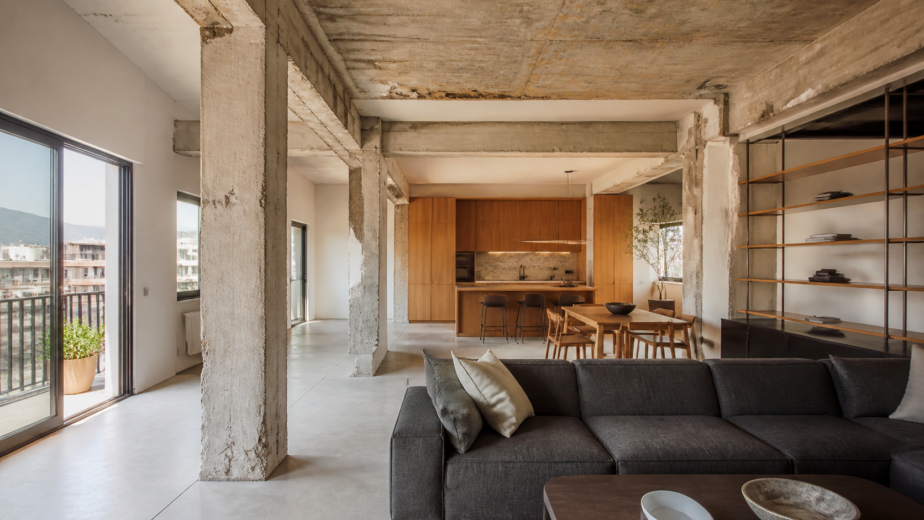


Greece Circular 1/2026 (reference 72019/Σ.1/21-04-2026) is the most detailed recent administrative guidance on Article 100 of Law 5038/2023 and the permanent investor residence permit, category B.5. It follows Joint Ministerial Decision 214926/2025 and consolidates questions raised by one-stop residence-permit services, investors and professional advisers.
This guide explains all 23 clarifications in practical English, with particular attention to EUR 250,000 Greece Golden Visa commercial-to-residential conversion projects. Examples marked “Official example” are adapted from the Circular itself. Examples marked “Practical example” are illustrative and must be checked against the exact title, planning, engineering, payment and applicant file.
How the 2026 Circular fits into the legal framework
The underlying rule is Article 100 of Law 5038/2023, as amended by Article 64 of Law 5100/2024. Joint Ministerial Decision 214926/2025 specifies the supporting documents and certification method. Circular 1/2026 explains how authorities should apply those rules in recurring real-world situations. The National Registry of Administrative Public Services, last updated on 4 August 2026, provides the current English application procedure.
Part I: Property qualification and the EUR 250,000 conversion category
1. One investment must concern one property
Official point: The one-property rule applies to all Article 100(2) categories, including the EUR 800,000, EUR 400,000 and special EUR 250,000 categories.
Practical annotation: Investors should not assume that two separate apartments can be combined to reach the minimum value. The deed, cadastral identity and ownership structure must support one qualifying property.
Practical example: Two separate EUR 130,000 apartments do not become one EUR 260,000 conversion investment merely because they are bought on the same day.
2. Parking and storage may be included in limited circumstances
Official point: Auxiliary spaces may be treated with the principal property when they are bought in the same deed, are in the same building and are genuinely auxiliary. Their price may count toward the minimum investment value, although they do not count as main-space floor area where the 120 sqm rule applies.
Official example: A converted 60 sqm apartment priced at EUR 248,000, plus a EUR 8,000 parking space and a storage area in the same building and deed, reaches EUR 256,000 and can satisfy the value and one-property tests.
3. A certificate of no encumbrances is not a residence-permit filing requirement
Official point: One-stop immigration services should not demand a certificate of encumbrances and claims for the initial Article 100 permit because it is not listed in the current joint ministerial decisions.
Practical annotation: This does not mean title due diligence is unnecessary. An independent buyer’s lawyer should still investigate mortgages, liens, ownership disputes and cadastral issues before purchase.
4. Pending deed registration need not block issuance
Official point: Where registration has been filed but not completed, evidence of the registration application or an appropriate lawyer’s certificate may allow the permit process to proceed. Final registration evidence must later be supplied during the initial five-year period or at renewal.
Practical example: A buyer has signed and fully paid, and the deed has been lodged with the Cadastre, but processing is delayed. The file may proceed using proof of submission, while the final registration certificate remains a follow-up obligation.
5. The conversion timing and the anti-avoidance rule
Official point: The relevant change of use must be evidenced by an act issued, updated or revised on or after 5 April 2024 and must be completed before the residence-permit application. A property that was already residential when the reform began cannot be switched temporarily to another use and then back to residential to manufacture access to the EUR 250,000 category.
The Circular also excludes future schemes where a non-residential construction permit was first issued after 5 April 2024 for a building that did not yet exist. The special rule is aimed at an existing property or existing project whose use changes, not a newly created future non-residential project designed only to be converted later.
Practical example: An existing office building documented before the reform and converted to residences under a post-5-April-2024 planning act may fall within the category. A new plot receiving an office-building permit in July 2024 and later changing to residential does not meet the same historical-use logic.
6. Historic investments and lapsed permits
Official point: Earlier investments may still be assessed under the threshold in force when the investment was completed, provided the historic timing, value and current payment-document requirements are proven. A prior investor whose permit lapsed may, in defined circumstances, make a new initial application using the same qualifying historic investment.
Official example: A EUR 250,000 purchase completed in 2017 may support an application today if all conditions applying to that historic investment and the present evidence requirements are met.
7. Property-use restrictions
Official point: Properties supporting current Article 100 permits may not be used for short-term rental in the sharing economy or be sublet. A property acquired through the change-of-use category may not be used as a company’s registered office or branch.
Practical example: A converted apartment held for the permit should not be listed for stays under 60 days on a platform. A conventional residential lease should be reviewed separately, but the converted residence should not be registered as the investor’s company office.
8. The 120 sqm test for standard-threshold investments
Official point: The 120 sqm minimum applies to built property under the EUR 800,000 and EUR 400,000 categories, not to the special EUR 250,000 change-of-use category. Parking and storage do not increase the main-space area for this test.
Official example: A standard-threshold residence with 118 sqm of main space does not pass the 120 sqm test merely because the same deed includes parking and storage.
9. The special EUR 250,000 qualification is generally used once
Official point: After a property has supported a permit under the change-of-use or listed-building special category, a later buyer cannot normally reuse the same exceptional EUR 250,000 basis. For a converted residence, the later transaction is now residential-to-residential and is assessed under the ordinary threshold rules.
Practical example: Investor A obtains a permit through a qualifying EUR 250,000 conversion property and later sells it to Investor B for EUR 300,000. Investor B cannot assume the property remains a fresh EUR 250,000 conversion investment.
Part II: Family members and continuity of residence
10. Family rights derive from the principal investor
Official point: Eligible children and ascendants derive their rights directly from the sponsoring investor. The other spouse or partner need not apply in every case for eligible relatives on that side to apply, subject to the applicable relationship and custody evidence.
Practical example: The investor’s spouse may decide not to obtain a family permit, while an eligible parent of that spouse may still be assessed through the investor-family relationship.
11. Renovation and replacement of the investment property
Official point: Renovating or extending the property does not by itself end the permit if ownership remains intact. To replace the qualifying asset without a break, the investor should first complete a new qualifying investment, notify the authority and only then dispose of the original property.
Practical annotation: Selling first and buying later creates a period in which the investor no longer holds the required qualifying property. The sequence matters.
12. Change of nationality
Official point: An investor who already held two nationalities when applying must generally continue with the nationality originally used, unless loss of that nationality is officially proven. A genuinely new nationality acquired after permit issuance may support reissuance under the new nationality with proper evidence.
Practical example: A second passport that existed before the investment cannot simply be substituted later for convenience; a nationality newly granted after issuance is treated differently.
13. Changing to another residence-permit category
Official point: A lawful holder may apply to change purpose, for example to a work-based permit, where the new category’s requirements are met. Authorities should assess the new category before partially revoking the investor or family permit, so lawful status is not interrupted unnecessarily.
14. Children aged 21 to 24
Official point: A child is normally covered as an investor’s family member until age 21 and may then obtain an independent transitional residence permit up to age 24. The service that issued the last family permit is responsible for the independent permit.
15. Minor children and biometric processing
Official point: Where a minor’s application was routed to a different one-stop service but biometrics were already collected and the sponsor’s permit was issued elsewhere, the receiving service may complete the minor’s case to avoid unnecessary repeat biometrics.
16. Renewal evidence of continued ownership
Official point: For renewal, continued ownership and possession may be shown through a recent E9 property declaration or recent cadastral extract. Different evidence applies to long-term tourist-accommodation or timeshare arrangements.
Practical example: An investor preparing for renewal should not rely only on the five-year-old purchase deed; the file should include current evidence that the qualifying property is still held.
Part III: Applicant status, rights and application documents
17. Applicants holding international-protection status
Official point: Protection granted by Greek authorities can place a person outside parts of the Migration Code, while protection granted by another EU state or a third country is treated differently. Travel-document and criminal-record evidence also depend on the applicant’s status and country of habitual residence.
Practical annotation: This is a specialist applicant-status issue and should be checked before property commitment.
18. No employment or self-employment right
Official point: The B.5 investor permit does not grant access to salaried employment or self-employment in Greece. A holder may own shares, exercise shareholder rights and act as a non-executive board member, but may not provide labour to the company, act as its legal representative or serve as an executive board member under this permit alone.
Practical example: Owning 100% of a Greek company may be possible; managing its daily operations as an executive employee is a different activity requiring separate legal analysis.
19. Active health-insurance cover
Official point: Valid insurance must exist when the initial or renewal application is filed. Foreign insurance must expressly cover Greece or provide worldwide cover meeting the required minimum terms. If missing, the authority may issue a 30-calendar-day request; failure to cure can lead to rejection.
20. Utility connection is not the legal test for conversion completion
Official point: Electricity or other utility connection is not required evidence for the residence-permit authority. In the conversion category, completion is certified through the engineer’s review of the relevant building permit, small-scale approval, file update or permit revision.
Practical example: A converted unit may await an electricity-provider connection while the legally relevant change-of-use act and engineer’s report are complete. The delay does not automatically mean the conversion is incomplete for Article 100 purposes.
21. Submit the complete certified passport
Official point: The application should include a certified copy of the entire valid passport or recognised travel document, not selected pages only. Certification may be performed by a competent public authority or authorised lawyer.
22. Suspension affecting Russian and Belarusian nationals
Official point: The Circular states that the suspension of new applications and approvals for Russian and Belarusian nationals continues, including relevant family applications and change-of-purpose cases treated as new grants.
Practical annotation: Because sanctions and nationality-based restrictions can change, the status must be rechecked at the filing date.
23. Misleading marketing and unexplained money flows
Official point: The Ministry warns that misleading advertising about thresholds, payment methods, rights or short-term-rental restrictions, and undocumented money transfers that reduce the investor’s real outlay below the legal minimum, may be referred to tax, law-enforcement and anti-money-laundering authorities. Violations may lead to permit revocation in addition to other penalties.
Practical example: A side agreement under which part of the purchase price is secretly returned to the buyer after closing is not a discount strategy; it can undermine the lawful investment amount and trigger serious compliance consequences.
Conversion-project file: practical review checklist
- One-property structure and exact cadastral identity.
- Historic non-residential use of the existing property or project.
- Post-5-April-2024 permit, approval, file update or revision supporting the change to residential use.
- Engineer’s report matching the deed, investor and converted main spaces.
- Notarial certificate covering property, price, payment details and prior Golden Visa use.
- Traceable full payment through a legally accepted channel.
- Registration certificate, lawyer’s certificate or proof that registration was filed.
- E9 declaration, active insurance and complete certified passport.
- Planned property use consistent with short-term-rental, subletting and business-address restrictions.
- Independent legal and technical review of the exact unit before commitment.
Official documents
- National Registry: Permanent Golden Visa (change of use) – initial issuance, updated 4 August 2026.
- Joint Ministerial Decision 214926/2025, Government Gazette B 6014.
- Ministry Circular 9/2024.
- Circular 1/2026 listing and professional notice, 23 April 2026.
For related project information, visit the Santheos Greece Golden Visa conversion projects, review the Golden Visa Q&A library, or contact Santheos to request the current documentation for a specific property.